Armonico Consort Biography
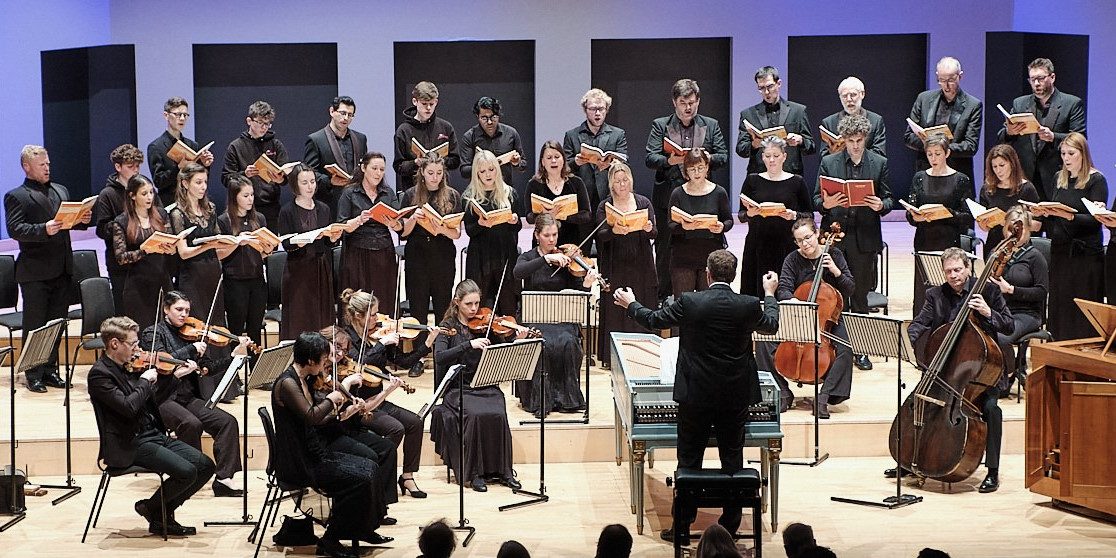
Armonico Consort began life in 2001, set up by Christopher Monks and a group of university colleagues with a shared passion for music from the Renaissance to Baroque, coupled with the imagination to find new and unusual ways to present concerts. Audiences seemed to love their engaging and imaginative approach, and most concerts in the first years sold out.
“That gave us the confidence, energy and self-belief to carry on and do more, also to take more risks with our programming, and keep on experimenting” says Christopher.
The ideas kept flowing, as did the titles “many of them were created down the pub…” including the concert programmes Naked Byrd, Supersize Polyphony, Monteverdi’s Flying Circus, Too Hot to Handel, Love Handels and Baroque around the Block. Their horizons broadened to include more contemporary repertoire but at the heart remained music of the Baroque and Renaissance, including some rarely heard gems performed by some of the world’s finest singers and period instrument players:
“We take great care to craft programmes which bring as much little-known music to life as possible, and find new and imaginative ways to bring this music to audiences. I’m particularly proud of Supersize Polyphony where we perform 40 and 60-part works by Tallis and Striggio in the round, surrounding the audience, interpolated by the timeless chants of Hildegard of Bingen.”
It was this particular programme which earned the group their first 5 star reviews, from The Times and the BBC Music Magazine, and there were plenty more to follow.
An education programme was fundamental to Armonico Consort from the outset and now encompasses three AC Academy after-school choirs and an in-school choir creation programme which trains teachers as choir leaders, leaving a strong legacy across the UK, to date creating almost 300 choirs and choir leaders reaching over 250,000 young people. Christopher Monks says
“Having reached 20 years, we are seeing so many of these young people who have been with the group since the age of 7 now singing as AC Academy Scholars alongside the professional singers. It is so rewarding to see how the opportunities we have created have changed them not just as musicians, but as humans, and this has driven much of what we are now going on to create”.
Future developments for AC Academy include the overseas expansion of the Choir Creation programme in Kenya working in partnership with several organisations to create choirs for street children, aiming to bring them back into health care and education, and away from abuse or addiction.
In 2016, in partnership with their sponsors Phillips 66, Armonico Consort created a major new initiative ‘The Voice Squad’ introducing a Phillips 66 workplace choir in an effort to improve the well-being of employees. This has had an incredibly positive impact on the mental health of the workforce, especially now that the beneficial effects of singing on the human mind are so well established. The ‘Voice Squad’ has since been extended to workplaces and communities around the country and as of 2020, following a new partnership with the Alzheimer’s Society, now includes care homes and their first ever choir ‘The Warwick Memory Singers’ for those living with dementia. Most exciting of all is the new research which suggests that Baroque music in particular is extremely effective at unlocking memories for those affected by dementia which is something the Consort plans to fully explore as they continually strive to find new ways for their musicians to thrive in the modern world.
Having now reached their 20th birthday year, Armonico Consort intend to celebrate as any reckless 20-year old might. Celebrations to mark this milestone have included the restaging of some of their favourite concert programmes such as the 53-part Missa Salisburgensis by Heinrich Biber, and a performance of Carmina Burana at the Royal Albert Hall. Upcoming highlights of the season include a tour and brand-new recording of newly edited 16-part works by Francesco Scarlatti, which saw them perform their Wigmore Hall debut back in 2003, St John Passion with Ian Bostridge, a world premiere of ‘It Takes a City’ at the Royal Albert Hall, a new work by Toby Young about the importance of family and community as well as a special programme alongside this to honour the Queen, the Commonwealth and the communities within it. They will also bring another unique performance to celebrate the Platinum Jubilee of the coronation of Queen Elizabeth II in the upcoming summer months. In addition to this, they are beginning a major new partnership with Foundaçion Azteca in Mexico which will see them train new choir leaders across Mexico working with the Orchestra of the Americas to create the first high level symphony orchestra and chorus in the country.